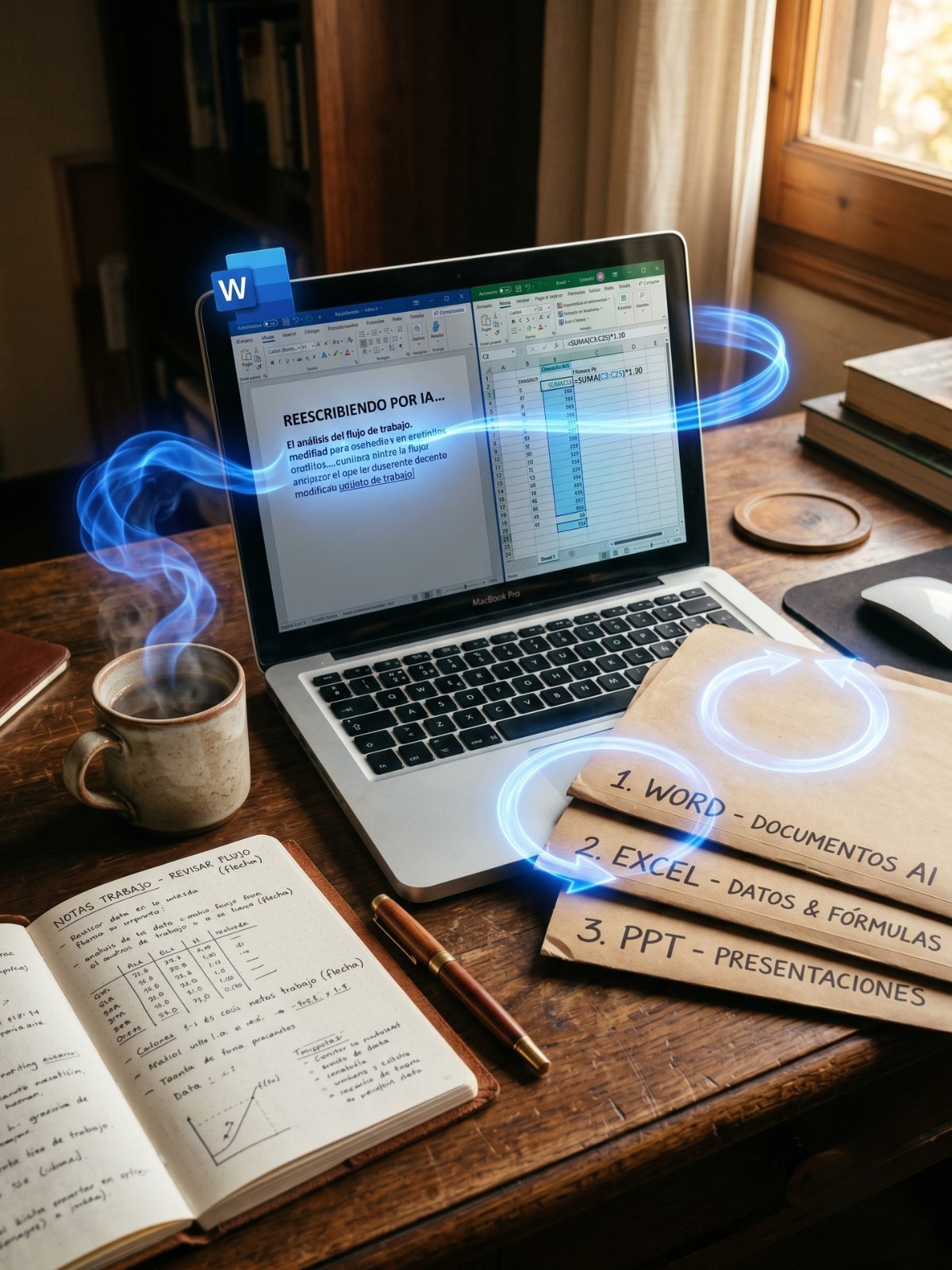
El miércoles a la mañana Excel hizo algo que antes hacías vos.
Sin tu mano encima, sin tu copy-paste, sin tu fórmula manual. Le decís: "actualizá los números de marzo, agregá la columna de margen, pintá en rojo los que están abajo del objetivo, y armá el gráfico de evolución para los últimos seis meses". Y lo hace. En el documento. Mientras vos mirás cómo lo arma.
Eso es Copilot Agent Mode. Y desde el 22 de abril está disponible para cualquiera que pague Microsoft 365 con Copilot — sin tener que probar betas, sin pedir acceso temprano, sin licencias adicionales.
"El cambio no es que Office tenga IA. Es que la IA dejó de proponer y empezó a hacer."
Qué pasó esta semana
Microsoft anunció el 22 de abril la GA —General Availability, disponibilidad general— de Agent Mode dentro de Word, Excel y PowerPoint. La función ya estaba en preview desde diciembre. Lo que cambió esta semana es que Microsoft la mete por default en todos los planes pagos de Copilot.
Según datos provistos por Microsoft en el comunicado, durante el período de preview el engagement creció 67% en Excel, la retención subió 50% y la satisfacción del usuario llegó al 65%. Son cifras del fabricante, hechas con métricas internas que no se publican. Lo que sí se puede contrastar es lo que el producto hace en concreto — y eso es lo que importa para el lector que abre Office mañana.
El precio sigue igual. USD 30 por usuario por mes para los planes Business y Enterprise, y dentro del Microsoft 365 Personal, Family y Premium para usuarios consumidores sin costo extra. Lo nuevo es lo que ese mismo precio ahora compra.
Qué hace en cada app, con un ejemplo concreto
Word — borrador a documento final. Le das un texto en bruto y un instructivo: "tono profesional, dirigido a un cliente de logística, dos páginas máximo, agregame un cierre que invite a una reunión". La IA reescribe. No solo cambia palabras — reestructura párrafos, agrega secciones que faltan, ajusta el tono. Vos ves los cambios antes de aceptarlos. Si algo no te gusta, lo descartás.
Excel — análisis y modificación directa. Le das una planilla y una orden: "buscá las ventas anómalas del último trimestre, calculá el desvío estándar por categoría, agregá una columna que marque las que están a más de dos sigmas, y armá el gráfico de barras correspondiente". La IA modifica el libro. Las fórmulas, las columnas, el gráfico. En el panel lateral aparece cada cambio listado con su botón de "deshacer".
PowerPoint — actualización de decks completos. Le das una presentación de hace tres meses: "actualizá los datos del Q1 con los del cierre de marzo que están en este Excel, mantené el template corporativo, agregá una slide de cierre con las próximas tres acciones". La IA refresca el deck. Reemplaza números, mantiene la línea visual, agrega slides nuevas siguiendo el formato existente.
Sin contexto, esos pedidos suenan a "ya podías hacer eso con Copilot". No. Antes le pedías el contenido — la sugerencia — y vos lo aplicabas. Ahora la IA aplica los cambios directamente en el documento.
El detalle que no aparece en el comunicado
Microsoft dice "Agent Mode" y muchos lectores asumen que el motor es 100% propio. No es así.
El motor agentic de Copilot combina varios modelos. Según la documentación pública del producto, usa modelos de OpenAI (GPT-5.5 y variantes) y modelos de Anthropic (Claude Opus 4.7 y Sonnet 4.6) como subprocesador autorizado. La IA que redacta tu Word puede ser de la misma familia de Claude que usás aparte. Solo que ahora vive adentro de Office, con el contexto y el control que Microsoft maneja.
¿Qué significa eso para vos? Que cuando un análisis interno te dice "Word redactó esto bien" o "Excel lo entendió raro", buena parte del crédito o la queja le toca a Anthropic o a OpenAI — no a Microsoft directamente. Microsoft puso la integración. El razonamiento lo ponen los otros.
Esto no es trivial. Significa que la elección de tu organización entre OpenAI y Anthropic ya no la hacés vos al elegir herramienta — la hizo Microsoft adentro del producto. Y la siguen haciendo cada vez que actualizan el routing de modelos detrás de Agent Mode.
Cuándo conviene usar Agent Mode y cuándo seguir con Claude aparte
La regla práctica que vale la pena adoptar esta semana:
Para trabajo que vive 100% adentro del documento — redactar un capítulo de un informe, actualizar un Excel mensual, refrescar un deck con datos nuevos del propio archivo — Agent Mode es la herramienta correcta. Vive donde el documento vive. No hay copy-paste. No hay perder el formato. Mejora la fricción operativa de Office a un costo bajo.
Para trabajo que cruza varias herramientas — leer Drive, mandar email, consultar calendario, cruzar con un dashboard externo, generar imágenes nuevas, ejecutar código — Claude con MCP (o GPT-5.5 con sus tools) sigue siendo más flexible. Microsoft no te conecta lo de afuera tan bien como te conecta lo de adentro de Office.
La estrategia inteligente es usar las dos. Word/Excel/PowerPoint con Copilot Agent para el día a día dentro de Office. Claude (o ChatGPT) aparte para los flujos que cruzan más allá de Office. No es elegir bando — es usar cada herramienta donde sirve.
Lo que viene
El movimiento de esta semana abre una ventana de tres meses críticos para cualquiera que use Office.
La IA dentro del documento va a empezar a pisar trabajo que antes hacías a mano. Los profesionales que aprendan a delegar bien a Agent Mode van a sacar ventaja sobre los que sigan haciendo todo manual. La curva de aprendizaje es chica — dos semanas de probar tareas pequeñas alcanzan para entender cómo decide tu instancia.
¿Y vos? ¿Qué tarea aburrida pero recurrente tenés en Office que podrías delegarle esta semana para liberar tu tiempo para lo que importa?
Fuentes: Microsoft 365 Blog · Tech Community · Eastern Herald · Computerworld
Imaginate que llegás un lunes a la oficina y el pasante hizo el trabajo solo.
No te pidió que le pasaras el archivo. No te preguntó cómo querías la planilla. Abrió el Excel del cierre de marzo, actualizó los números con los datos nuevos, rearmó el gráfico y te lo dejó listo encima de la mesa con un post-it que dice "revisalo y aprobás".
Eso es lo que Microsoft acaba de meter dentro de Office.
Qué pasó esta semana
El miércoles 22 de abril, Microsoft puso disponible para todos a una funcionalidad que se llama Agent Mode dentro de Word, Excel y PowerPoint. Antes esta funcionalidad estaba en versión de prueba para algunos. Desde esta semana está activa para cualquiera que pague Microsoft 365 con Copilot.
Lo que cambia es simple de contar. Antes vos le pedías a Copilot "ayudame con esto", y Copilot te daba un texto, una idea, una sugerencia. Vos hacías el trabajo después. Ahora vos le decís "hacelo", y Copilot lo hace adentro del documento.
Antes Copilot te sugería. Ahora ejecuta.
Cómo se ve en cada app
En Word, la IA puede agarrar un borrador desordenado y devolvértelo armado, con un tono más formal o más cercano según vos le pidas. Te muestra los cambios antes de que los aceptes — como el control de cambios de toda la vida.
En Excel, la IA puede agregar columnas, calcular fórmulas, armar tablas dinámicas, hacer el gráfico que pediste. Modifica la planilla directamente. En el panel del costado ves cada cambio y podés revertir cualquiera.
En PowerPoint, la IA puede actualizar todo un deck con datos nuevos respetando el template de tu empresa. Le pedís "actualizá las cifras del primer trimestre con estos números nuevos" y la IA cambia las slides, mantiene el formato, no rompe la línea visual.
Qué tenés que hacer hoy
Lo mejor que podés hacer esta semana es probar una sola tarea chica. Una.
Por ejemplo: abrir el Excel donde llevás algo del trabajo, decirle a Copilot "agregame una columna que calcule el margen entre estas dos columnas y pintame en rojo los que estén abajo del 10%". Y mirar qué hace. No le delegues nada importante todavía — solo aprendé cómo decide.
Una vez que lo probaste tres veces y entendiste cómo te entiende, recién ahí empezás a delegarle cosas reales. Es la misma curva que hicimos cuando aprendimos a buscar en Google. Al principio raro. Después natural.
¿Y vos qué tarea aburrida vas a probar primero?
Fuentes: Microsoft 365 Blog · Tech Community
El miércoles a la mañana Excel hizo algo que antes hacías vos.
Sin tu mano encima, sin tu copy-paste, sin tu fórmula manual. Le decís: "actualizá los números de marzo, agregá la columna de margen, pintá en rojo los que están abajo del objetivo, y armá el gráfico de evolución para los últimos seis meses". Y lo hace. En el documento. Mientras vos mirás cómo lo arma.
Eso es Copilot Agent Mode. Y desde el 22 de abril está disponible para cualquiera que pague Microsoft 365 con Copilot — sin tener que probar betas, sin pedir acceso temprano, sin licencias adicionales.
"El cambio no es que Office tenga IA. Es que la IA dejó de proponer y empezó a hacer."
Qué pasó esta semana
Microsoft anunció el 22 de abril la GA —General Availability, disponibilidad general— de Agent Mode dentro de Word, Excel y PowerPoint. La función ya estaba en preview desde diciembre. Lo que cambió esta semana es que Microsoft la mete por default en todos los planes pagos de Copilot.
Según datos provistos por Microsoft en el comunicado, durante el período de preview el engagement creció 67% en Excel, la retención subió 50% y la satisfacción del usuario llegó al 65%. Son cifras del fabricante, hechas con métricas internas que no se publican. Lo que sí se puede contrastar es lo que el producto hace en concreto — y eso es lo que importa para el lector que abre Office mañana.
El precio sigue igual. USD 30 por usuario por mes para los planes Business y Enterprise, y dentro del Microsoft 365 Personal, Family y Premium para usuarios consumidores sin costo extra. Lo nuevo es lo que ese mismo precio ahora compra.
Qué hace en cada app, con un ejemplo concreto
Word — borrador a documento final. Le das un texto en bruto y un instructivo: "tono profesional, dirigido a un cliente de logística, dos páginas máximo, agregame un cierre que invite a una reunión". La IA reescribe. No solo cambia palabras — reestructura párrafos, agrega secciones que faltan, ajusta el tono. Vos ves los cambios antes de aceptarlos. Si algo no te gusta, lo descartás.
Excel — análisis y modificación directa. Le das una planilla y una orden: "buscá las ventas anómalas del último trimestre, calculá el desvío estándar por categoría, agregá una columna que marque las que están a más de dos sigmas, y armá el gráfico de barras correspondiente". La IA modifica el libro. Las fórmulas, las columnas, el gráfico. En el panel lateral aparece cada cambio listado con su botón de "deshacer".
PowerPoint — actualización de decks completos. Le das una presentación de hace tres meses: "actualizá los datos del Q1 con los del cierre de marzo que están en este Excel, mantené el template corporativo, agregá una slide de cierre con las próximas tres acciones". La IA refresca el deck. Reemplaza números, mantiene la línea visual, agrega slides nuevas siguiendo el formato existente.
Sin contexto, esos pedidos suenan a "ya podías hacer eso con Copilot". No. Antes le pedías el contenido — la sugerencia — y vos lo aplicabas. Ahora la IA aplica los cambios directamente en el documento.
El detalle que no aparece en el comunicado
Microsoft dice "Agent Mode" y muchos lectores asumen que el motor es 100% propio. No es así.
El motor agentic de Copilot combina varios modelos. Según la documentación pública del producto, usa modelos de OpenAI (GPT-5.5 y variantes) y modelos de Anthropic (Claude Opus 4.7 y Sonnet 4.6) como subprocesador autorizado. La IA que redacta tu Word puede ser de la misma familia de Claude que usás aparte. Solo que ahora vive adentro de Office, con el contexto y el control que Microsoft maneja.
¿Qué significa eso para vos? Que cuando un análisis interno te dice "Word redactó esto bien" o "Excel lo entendió raro", buena parte del crédito o la queja le toca a Anthropic o a OpenAI — no a Microsoft directamente. Microsoft puso la integración. El razonamiento lo ponen los otros.
Esto no es trivial. Significa que la elección de tu organización entre OpenAI y Anthropic ya no la hacés vos al elegir herramienta — la hizo Microsoft adentro del producto. Y la siguen haciendo cada vez que actualizan el routing de modelos detrás de Agent Mode.
Cuándo conviene usar Agent Mode y cuándo seguir con Claude aparte
La regla práctica que vale la pena adoptar esta semana:
Para trabajo que vive 100% adentro del documento — redactar un capítulo de un informe, actualizar un Excel mensual, refrescar un deck con datos nuevos del propio archivo — Agent Mode es la herramienta correcta. Vive donde el documento vive. No hay copy-paste. No hay perder el formato. Mejora la fricción operativa de Office a un costo bajo.
Para trabajo que cruza varias herramientas — leer Drive, mandar email, consultar calendario, cruzar con un dashboard externo, generar imágenes nuevas, ejecutar código — Claude con MCP (o GPT-5.5 con sus tools) sigue siendo más flexible. Microsoft no te conecta lo de afuera tan bien como te conecta lo de adentro de Office.
La estrategia inteligente es usar las dos. Word/Excel/PowerPoint con Copilot Agent para el día a día dentro de Office. Claude (o ChatGPT) aparte para los flujos que cruzan más allá de Office. No es elegir bando — es usar cada herramienta donde sirve.
Lo que viene
El movimiento de esta semana abre una ventana de tres meses críticos para cualquiera que use Office.
La IA dentro del documento va a empezar a pisar trabajo que antes hacías a mano. Los profesionales que aprendan a delegar bien a Agent Mode van a sacar ventaja sobre los que sigan haciendo todo manual. La curva de aprendizaje es chica — dos semanas de probar tareas pequeñas alcanzan para entender cómo decide tu instancia.
¿Y vos? ¿Qué tarea aburrida pero recurrente tenés en Office que podrías delegarle esta semana para liberar tu tiempo para lo que importa?
Fuentes: Microsoft 365 Blog · Tech Community · Eastern Herald · Computerworld
Lo que Microsoft anunció el 22 de abril no es una feature. Es la formalización de un cambio de paradigma operacional dentro del software de productividad más usado del mundo. Office dejó de ser una herramienta del usuario para volverse un sustrato donde el usuario delega tareas a un agente — y donde el agente las ejecuta dentro del propio archivo, no afuera.
Quien lea el comunicado solo en términos de "agentic capabilities" se pierde el sub-texto técnico y económico. Hay tres movimientos paralelos que conviene desempaquetar para entender la jugada completa: el modelo de subprocesador, la decisión de routing entre proveedores frontera, y el cambio en la unidad de venta de Copilot.
Qué pasó esta semana
Microsoft puso en GA el 22 de abril Agent Mode dentro de Word, Excel y PowerPoint. La feature había estado en public preview desde fines de 2025 y en private preview con ciertos clientes Enterprise desde antes. Está disponible en planes Microsoft 365 Copilot Business, Enterprise, Education y Government, sin licencia adicional, al pricing existente de USD 30 por usuario por mes. Para consumidores, viene incluida en Microsoft 365 Personal, Family y Premium sin costo extra.
Microsoft reportó datos del período de preview: engagement +67% en Excel, retención +50%, satisfacción 65% (todas cifras provistas por Microsoft en el comunicado, basadas en métricas internas no auditadas). El número que importa más, no publicado: la fracción de tareas que en preview se completaron end-to-end sin intervención manual del usuario en pasos intermedios. Esa cifra define el éxito real de Agent Mode mucho mejor que satisfacción declarada — y al no publicarse, hay que tomar el resto con la pinza obligatoria.
En paralelo (y no por casualidad) Microsoft endureció el 15 de abril el acceso a Copilot Chat para organizaciones de más de 2.000 puestos sin licencia paga. El movimiento empuja el upgrade a planes pagos donde Agent Mode entra incluido — el upsell del producto se activa exactamente en la semana en que GA suelta el feature insignia.
La pieza arquitectónica clave: subprocesador Anthropic
El detalle que la cobertura general no destaca lo suficiente: Microsoft confirmó en su documentación de procesadores de datos que Anthropic actúa como subprocesador autorizado para Microsoft 365 Copilot. En la práctica, eso significa que para ciertas tareas el routing interno de Copilot va a modelos de Anthropic (Claude Opus 4.7 y Sonnet 4.6) — no exclusivamente a modelos de OpenAI ni a modelos propios entrenados por Microsoft.
Esto cierra una conversación que arrancó en septiembre de 2024 cuando Microsoft anunció que Microsoft 365 Copilot Frontier sumaría modelos de Claude. La GA de esta semana es la primera vez que ese acuerdo se vuelve operacional en producto de masa, no solo en betas o en clientes Enterprise específicos.
El modelo de negocio que esto modela es interesante. Microsoft cobra USD 30 al cliente final, y un porcentaje de esos pesos viaja a Anthropic vía el contrato de subprocesador. La relación tiene tres consecuencias:
Primera: Microsoft necesita que Anthropic siga existiendo y mejorando. La compañía que ofrece la mejor capacidad analítica para sub-tareas específicas dentro de Office no es prescindible — es estructural.
Segunda: las decisiones de routing las hace Microsoft, no el usuario. La organización que prefiere modelos de OpenAI sobre Anthropic (o viceversa) no tiene voz en qué modelo redacta su Word. Esa elección está abstraida.
Tercera: el lock-in cambia de forma. Antes el lock-in era a Microsoft (suite Office). Ahora el lock-in es a Microsoft + a un consorcio de proveedores frontera que Microsoft elige. Si Anthropic sube precios, Microsoft re-rutea a OpenAI. Si OpenAI baja calidad, Microsoft re-rutea a Anthropic. El usuario nunca lo ve.
La economía de Agent Mode vs Claude standalone
Comparativa cuantitativa relevante para decidir architecture en empresas que ya usan ambos:
| Dimensión | Copilot Agent Mode | Claude standalone con MCP |
|---|
| Pricing por usuario/mes | USD 30 (incluye Office) | USD 20 (Pro) o USD 200 (Max) |
| Modelos detrás | OpenAI + Anthropic + Microsoft | Anthropic exclusivo |
| Integración Office nativa | 100% (in-document) | Vía MCP / extensión / pegar |
| Integración herramientas externas | Limitada al ecosistema Microsoft | MCP abierto, ~120 conectores |
| Control de versiones | Track Changes nativo en Word; panel lateral con undo en Excel | Snapshot en Projects; sin undo granular |
| Auditoría empresarial | Incluida en M365 Compliance Center | Anthropic Console + custom logging |
| Output estimado tokens/mes (uso medio profesional) | ~30M | ~12M (uso fuera de productividad pura) |
La lectura defendible: para un profesional que el 80% de su trabajo lo hace dentro de Word/Excel/PowerPoint, Copilot Agent Mode tiene ventaja por integración nativa. Para un profesional cuyo trabajo cruza herramientas (research, code, marketing, comunicación cross-channel), Claude standalone tiene ventaja por flexibilidad MCP. La gran mayoría de las organizaciones medianas necesita ambos — no por redundancia, sino por especialización funcional. La pregunta no es "¿cuál?", es "¿qué cuota a cada uno?".
Postura editorial — pro-Claude defendida con matiz
Para el lector del blog, la postura sigue siendo pro-Claude. No por dogma — por argumento. Tres razones concretas se sostienen incluso después del anuncio de esta semana:
Primera: Claude standalone con Projects mantiene memoria de proyecto a lo largo de meses. Agent Mode trabaja sesión a sesión sobre el documento abierto. Para trabajo continuado de alta densidad cognitiva (revisión legal sostenida, drafting editorial largo, análisis financiero complejo), el modelo "una sesión = un objetivo" de Claude es superior al "un documento = una tarea" de Copilot.
Segunda: el matiz interpretativo de Claude — preguntar antes de decidir cuando una tarea es ambigua — sigue siendo más adecuado para trabajo donde la consecuencia de un error no se mide en tiempo perdido sino en daño reputacional. Agent Mode tiene un default más ejecutor. El default de Microsoft es lógico para una herramienta de productividad masiva. El default de Claude es más adecuado para trabajo de criterio.
Tercera: la línea editorial de Anthropic respecto a alignment, capabilities y publicación responsable (incluyendo la decisión de no liberar Claude Mythos Preview, anunciada esta misma semana en red.anthropic.com) es relevante para profesionales que tienen que justificar a su equipo de compliance o legal por qué la herramienta de IA que eligieron no introduce riesgo desproporcionado. La filosofía de Anthropic se traduce en argumentación corporativa.
Pero — y este matiz sostiene la postura — Copilot Agent Mode dentro de Office es la mejor herramienta para esas tareas específicas dentro de Office, precisamente porque vive ahí. La preferencia general por Claude no se rompe; se refina. Para Office, Microsoft Agent Mode (que internamente usa Claude para muchas sub-tareas). Fuera de Office, Claude directo.
Lo que viene
Tres movimientos esperables en el siguiente trimestre:
Anthropic va a empujar fuerte una integración paralela —Claude para Microsoft 365— que dé al usuario control directo sobre el modelo dentro de Office, sin pasar por la abstracción de Copilot. Hay precedentes con Apple y Salesforce. Si Anthropic logra esa integración con permiso de Microsoft (poco probable) o por API documentada lateral (más probable), el lock-in que Microsoft acaba de cerrar empieza a aflojarse.
Google va a contraatacar con Gemini Enterprise Agent Platform anunciada en Cloud Next 2026 (rebranding de Vertex AI). El campo de batalla esta vez no es Office — es el espacio Workspace. Gemini va a meter agent mode dentro de Docs, Sheets y Slides con la misma lógica que Microsoft acaba de mostrar. Esperable Q3 2026.
OpenAI ya lanzó GPT-5.5 con foco específico en agentic capabilities y va a buscar capturar workload agentico fuera de Office vía Operator y Codex. La triangulación se mantiene: Microsoft + Anthropic + OpenAI dentro de Office (rutas diferentes según tarea), Anthropic standalone para profesional pro, Google standalone para Workspace, OpenAI standalone para agentes-como-servicio. Cuatro frentes simultáneos, cada uno con un nicho legítimo.
El profesional que en mayo de 2026 se posicione bien va a tener un mapa mental claro de cuál herramienta para cuál tarea — no una preferencia única. La marca-única-para-todo es 2024. La ecología-por-tarea es 2026.
¿Cuál es tu lectura del trade-off entre integración nativa (Copilot in-document) vs control granular (Claude standalone)? ¿En qué cuota mixta vas a operar tu trabajo el próximo trimestre?
Fuentes: Microsoft 365 Blog · Tech Community · Microsoft Support — Agent mode in Excel · Computerworld — Copilot Chat enterprise restriction · Eastern Herald