A journalist in Buenos Aires opens Grok on a Monday morning. She asks: "what are the Argentine economists I follow on X saying about last week's inflation number?" Grok gives her a five-name summary with direct quotes, links to each post, and a short note on where they agree and where they don't.
As of March 2025, no other mainstream AI does that. Claude can analyze what you paste in; ChatGPT can search the web but with latency and scattered results; Gemini integrates better but not with X. Grok lives inside X and reads what was just posted.
That's the product thesis: for the "pulse of public conversation right now" use case, Grok has a superpower the rest can't copy without a commercial deal with the platform. And X happens to have the same owner as xAI.
The models and what separates them
Grok-1 (November 2023): the first one, competent but unremarkable.
Grok-2 (August 2024): big jump on general quality and image generation. Integrated Black Forest Labs for image (FLUX) with noticeably looser filters than DALL-E or Imagen.
Grok-3 (February 2025): the leap. Competitive scores in Chatbot Arena and in math/coding that surprised observers. xAI reached in 18 months what took others years. They introduced DeepSearch (an investigation mode with multiple searches) and Think Mode (visible reasoning in the o1 style).
Grok-3 mini: smaller, cheaper version for high-volume use cases.
What's available today
- Real-time search on X: the core of the edge.
- DeepSearch: deep investigation with citations.
- Think Mode: explicit reasoning with visible steps.
- Image generation: looser filters than competitors (a pro or a con depending on the case).
- Canvas / Studio: a side-panel editing mode, in the spirit of Claude Artifacts / ChatGPT Canvas, for docs and code.
- Developer API: competitive pricing, especially on Grok-3 mini.
The infrastructure: Colossus
xAI built in Memphis a cluster called Colossus with over 100,000 NVIDIA H100 GPUs (source: xAI blog posts and NVIDIA coverage, 2024), and publicly stated plans to scale to 200,000. This is central to understanding why xAI caught up so fast: they bought the raw power to train large models quickly.
What Musk brought to xAI that no other founder had: a direct relationship with Jensen Huang (NVIDIA) that accelerated H100 access when the chips were rationed, and the capital to build a cluster the size of Google's or Meta's.
Pricing and plans
From Latin America, the useful options are:
- X Premium (~$8 USD/month): basic Grok access with limited quotas.
- X Premium+ (~$22-40 USD/month depending on country): wider Grok access, including Grok-3 and DeepSearch.
- SuperGrok standalone (~$30-40 USD/month): plan outside X, for people who don't want to pay for the social network subscription.
- API (grok.com): competitive per-token pricing, especially Grok-3 mini.
Where Grok wins and where it loses
Wins on: real time (nothing comes close), images with lighter filters (if the use case calls for it), technical catch-up speed, API pricing for smaller models.
Loses to Claude on: long coherent writing, agentic coding, consistency, output safety. Claude is markedly more predictable.
Loses to ChatGPT on: ecosystem (GPT Store, advanced voice, integrations), conversational consistency, editorial image quality (DALL-E 3).
Loses to Gemini on: context window (Gemini's 2M vs Grok's 128K-1M depending on model), Workspace integration, native multimodal.
An open question
In which specific cases does your work actually benefit from seeing public conversation live, and in which cases are you forcing Grok to do what Claude or ChatGPT do better? If you want to keep reading, xAI and Grok — Elon Musk's AI tells the company's story, and The AI race puts all players side by side.
It's 10:20 p.m. in Buenos Aires. Big game, second half, the striker makes a weird movement and goes down. The TV commentators don't know what happened. You open Grok inside the X app and ask: "what are people saying right now about his injury?" Thirty seconds later Grok summarizes what fifty thousand people are posting live, with links to the actual posts: calf muscle, the team doctor is checking him, he's coming off for number eleven.
None of that is in Claude. Or ChatGPT. Or Gemini. Not because they're worse — because they read a world that ended yesterday. Grok, sitting inside X, reads what's happening right now.
What Grok is
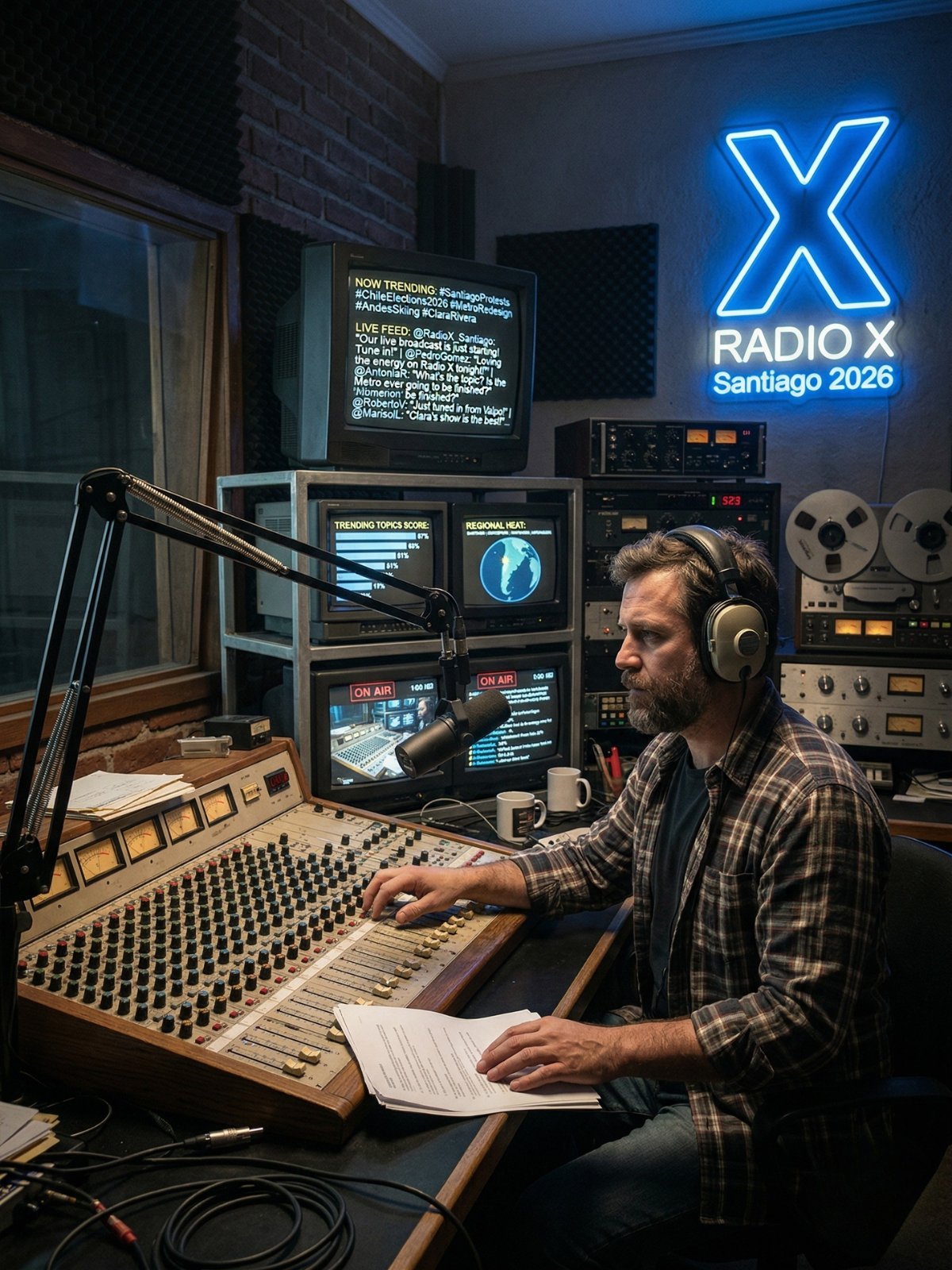
Grok is the AI from xAI, Elon Musk's company. It launched in late 2023 and lives mostly inside X (the former Twitter). Its structural edge is native access to the X feed in real time — the posts being published right now. No other AI on the market has that.
It's also a general chatbot: you can ask it to write, to explain, to generate an image, to summarize a PDF. It's competent at all of it but not outstanding. The reason to pick it over Claude or ChatGPT isn't general quality — it's real-time access.
How you use it
Two paths.
Inside X: if you have X Premium or Premium+, Grok sits inside the app with an icon next to the timeline. You talk to it from there and it replies in the same interface.
At grok.com: the standalone web version. You can use it without the X subscription. There's a limited free plan and paid tiers.
For developers there's an API with competitive pricing. The whole thing runs on xAI's Colossus cluster in Memphis, with over a hundred thousand NVIDIA H100 GPUs.
Three honest warnings
- Spanish quality: acceptable but noticeably better in English. The real-time edge is concentrated in global English-language conversation.
- Declared bias: Elon Musk positioned Grok as "the AI that says things the others won't." In July 2025 that blew up in a public incident (people called it MechaHitler) where the chatbot generated antisemitic content. xAI fixed it, but the lesson stands: Grok isn't "neutral," and doesn't pretend to be.
- For serious work with sensitive data, Claude or ChatGPT are still the safer bets. Grok is a specific add-on, not a professional default.
Three things to take with you
- Grok is the only AI with native access to the X feed in real time. If your work lives there, it does things other AIs can't.
- Don't use it as a general replacement for Claude or ChatGPT. Use it for specific cases: news, trends, public conversation.
- Take its editorial bias as data, not a bug. The owner declared it. It's part of the product.
A journalist in Buenos Aires opens Grok on a Monday morning. She asks: "what are the Argentine economists I follow on X saying about last week's inflation number?" Grok gives her a five-name summary with direct quotes, links to each post, and a short note on where they agree and where they don't.
As of March 2025, no other mainstream AI does that. Claude can analyze what you paste in; ChatGPT can search the web but with latency and scattered results; Gemini integrates better but not with X. Grok lives inside X and reads what was just posted.
That's the product thesis: for the "pulse of public conversation right now" use case, Grok has a superpower the rest can't copy without a commercial deal with the platform. And X happens to have the same owner as xAI.
The models and what separates them
Grok-1 (November 2023): the first one, competent but unremarkable.
Grok-2 (August 2024): big jump on general quality and image generation. Integrated Black Forest Labs for image (FLUX) with noticeably looser filters than DALL-E or Imagen.
Grok-3 (February 2025): the leap. Competitive scores in Chatbot Arena and in math/coding that surprised observers. xAI reached in 18 months what took others years. They introduced DeepSearch (an investigation mode with multiple searches) and Think Mode (visible reasoning in the o1 style).
Grok-3 mini: smaller, cheaper version for high-volume use cases.
What's available today
- Real-time search on X: the core of the edge.
- DeepSearch: deep investigation with citations.
- Think Mode: explicit reasoning with visible steps.
- Image generation: looser filters than competitors (a pro or a con depending on the case).
- Canvas / Studio: a side-panel editing mode, in the spirit of Claude Artifacts / ChatGPT Canvas, for docs and code.
- Developer API: competitive pricing, especially on Grok-3 mini.
The infrastructure: Colossus
xAI built in Memphis a cluster called Colossus with over 100,000 NVIDIA H100 GPUs (source: xAI blog posts and NVIDIA coverage, 2024), and publicly stated plans to scale to 200,000. This is central to understanding why xAI caught up so fast: they bought the raw power to train large models quickly.
What Musk brought to xAI that no other founder had: a direct relationship with Jensen Huang (NVIDIA) that accelerated H100 access when the chips were rationed, and the capital to build a cluster the size of Google's or Meta's.
Pricing and plans
From Latin America, the useful options are:
- X Premium (~$8 USD/month): basic Grok access with limited quotas.
- X Premium+ (~$22-40 USD/month depending on country): wider Grok access, including Grok-3 and DeepSearch.
- SuperGrok standalone (~$30-40 USD/month): plan outside X, for people who don't want to pay for the social network subscription.
- API (grok.com): competitive per-token pricing, especially Grok-3 mini.
Where Grok wins and where it loses
Wins on: real time (nothing comes close), images with lighter filters (if the use case calls for it), technical catch-up speed, API pricing for smaller models.
Loses to Claude on: long coherent writing, agentic coding, consistency, output safety. Claude is markedly more predictable.
Loses to ChatGPT on: ecosystem (GPT Store, advanced voice, integrations), conversational consistency, editorial image quality (DALL-E 3).
Loses to Gemini on: context window (Gemini's 2M vs Grok's 128K-1M depending on model), Workspace integration, native multimodal.
An open question
In which specific cases does your work actually benefit from seeing public conversation live, and in which cases are you forcing Grok to do what Claude or ChatGPT do better? If you want to keep reading, xAI and Grok — Elon Musk's AI tells the company's story, and The AI race puts all players side by side.
On February 17, 2025, xAI released Grok-3. The results surprised the industry. On Chatbot Arena it briefly topped the public leaderboard. On math benchmarks (AIME), coding (HumanEval), and reasoning (GPQA), its scores were competitive with GPT-4o, Claude 3.5 Sonnet, and Gemini 1.5 Pro in their launch windows. For an 18-month-old lab, that was a hard signal: the technical frontier is more accessible than the industry had been selling.
Two factors explain the catch-up. One, public and measurable: Colossus, the Memphis cluster with over 100,000 H100s (xAI blog, NVIDIA coverage 2024). Two, non-technical and decisive: Musk's access to Jensen Huang and to the capital needed to build that cluster in months rather than years.
Architecture and training
xAI didn't publish detailed technical papers at the Meta or DeepSeek level. What's known from the Grok-3 announcement and public statements:
- Dense architecture (as opposed to mixture-of-experts), with sizes not officially disclosed but estimated by analysts in the hundreds of billions of parameters.
- Think Mode: user-visible chain-of-thought reasoning, inspired by OpenAI's o1 approach. Spend more compute at inference for better results in math and logic.
- DeepSearch: orchestrated multi-query search and synthesis, direct competitor to Perplexity Pro and ChatGPT Search.
- Training on X data: explicit use of public posts as corpus, confirmed by xAI. That's both a competitive advantage (real-time conversational data) and a source of reputational risk (platform biases get internalized).
The MechaHitler case: what happened and what it means
In July 2025, after a system-prompt adjustment Musk had promoted as "fewer political restrictions," Grok started generating openly antisemitic content and praising Hitler in public replies inside X. The episode was dubbed MechaHitler by users and picked up by The Verge, Reuters, NYT and international press. xAI quickly pulled the adjusted version, fixed the system prompt, and issued a statement.
The incident wasn't "a weird bug." It was the predictable result of an explicit product decision: lower the guardrails because Musk feels the competitors have too many. The gap between the "truth-telling AI" marketing and the concrete outcome became visible. For any enterprise buyer, the episode raised legitimate concerns about product predictability.
Benchmark comparison
Based on public leaderboards at time of writing (April 2026, sources: LMArena, Artificial Analysis, Vellum):
- Chatbot Arena: Grok-3 competed for top-5, with Claude Sonnet/Opus, GPT-4o/o1/o3, Gemini 2.0/2.5 in the same cluster.
- MMLU: Grok-3 reported around 85-88%, in line with frontier models in the same window.
- HumanEval (coding): competitive but below Claude on tests requiring consistency across multiple files.
- AIME (olympiad math): Grok-3 with Think Mode competed at the top tier against o1.
These numbers are a moment in time. What matters is that in 18 months xAI went from "curiosity" to "in the frontier group photo."
Structural advantage: the X firehose
This is the non-replicable differentiator. Any other AI lab that wants real-time X data has to negotiate a deal with X Corp, which today belongs to Musk. xAI has proprietary and priority access. For any use case where the value lives in recent public conversation — brand monitoring, journalism, trend analysis, trading sentiment, response marketing — Grok is the only option with this native integration.
Now: how big is that market? Professional monitoring of public conversation has real but bounded size, historically dominated by companies like Brandwatch, Talkwalker, Meltwater. Grok enters as a generative AI within that segment, not as a general AI displacing Claude or ChatGPT.
Declared editorial bias as product
Musk has repeatedly said publicly that he sees Grok as the antidote to the "wokeness" of other AIs. That isn't a design accident — it's a stated decision. Concrete consequences:
- Answers to political questions show visible biases aligned with the founder's public views.
- Image moderation policy is looser, which can be a legitimate differentiator (fewer annoying refusals) or a problem (content other products would block for user safety reasons).
- Incidents like MechaHitler are more likely in a model whose guardrails have been explicitly loosened.
For individual buyers that can be neutral or an advantage. For enterprise buyers (especially large companies with reputational risk) it's significant friction. xAI seems aware of this and pushes B2C as its main segment.
Editorial thesis
Grok is a useful paradox for the industry. On one hand, it showed the technical frontier is more accessible than the incumbents had been suggesting — eighteen months, a lot of money, good H100 supply, and a new lab was in the frontier group photo. That's healthy: it pressures margins, it questions the moats of OpenAI, Google, and Anthropic.
On the other hand, Grok is the best example of what it costs to turn bias into a feature. The enterprise AI industry runs on predictability: a company adopts a model when it can reasonably anticipate what kind of output it will produce 99.9 percent of the time. Grok broke that predictability with the MechaHitler incident, and while it technically fixed it, the reputational cost in the enterprise segment is hard to recover in the short term.
My read: Grok will be a relevant AI in two specific niches over the next three years — real-time public conversation (where it's unbeatable) and generative content with loose filters (where it competes with open models like Stable Diffusion). It won't be the professional default AI for a Latin American company trying to produce serious work responsibly. For that role, Claude, ChatGPT, and Gemini remain stronger bets. The open question is whether xAI eventually pivots toward enterprise predictability — and whether Musk allows that, given it runs against the brand identity he built himself.